
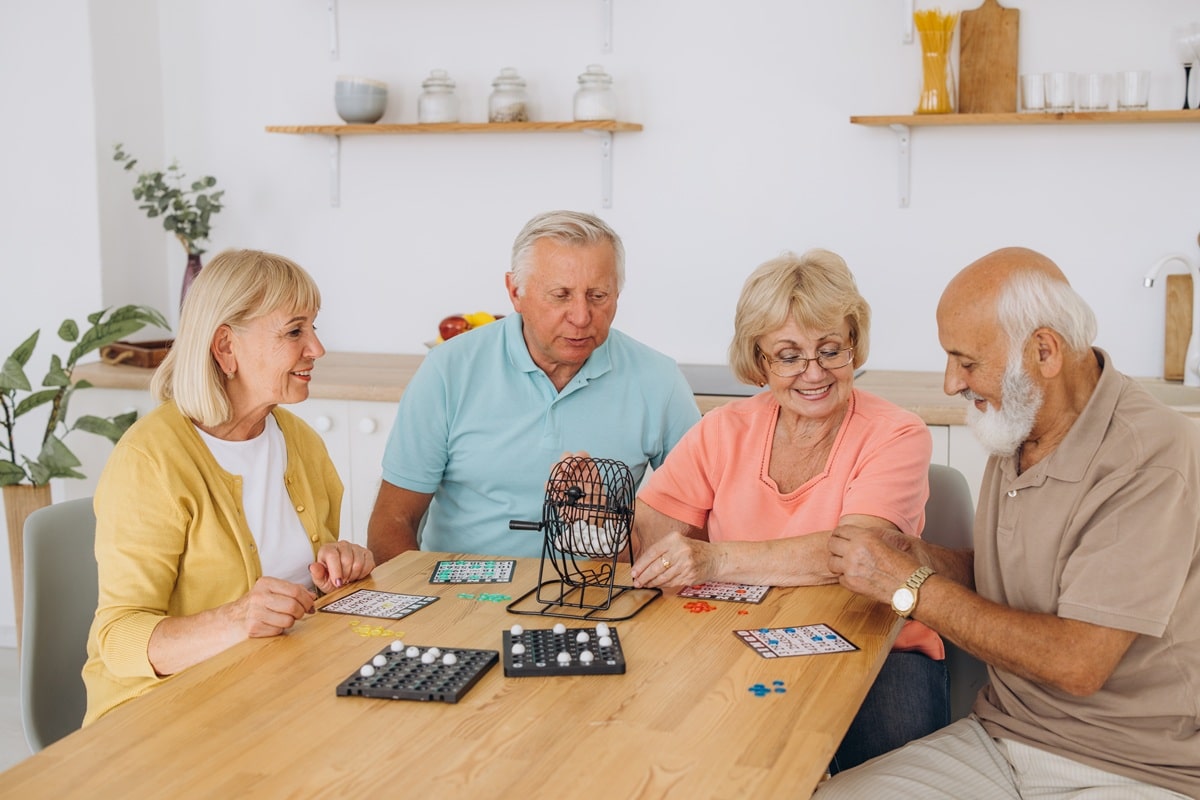
At Bridgeway Park Canton, we recognize that individuals with memory impairments need specialized support. Among the many areas where they need support, cognitive wellness is especially important. It is one of the most important areas of support for helping them live well and thrive. This is what memory care works toward.
Memory care activities actively stimulate residents’ neural pathways and foster emotional security. This targeted cognitive stimulation through physical activities, social interaction, and engaging programs helps residents maintain mental sharpness, reduce agitation, and improve overall quality of life.
Memory care activities are more than just engaging pursuits; they are tools that help slow the progression of dementia. They help residents stay engaged and connected, all while providing personalized support. Here’s how memory care activities like puzzles, brain games, and reminiscence therapy help residents receive tailored cognitive support.
Maximizes Remaining Abilities
Dementia, as a progressive condition, affects an individual’s cognitive and mental abilities on multiple levels. It affects their memory function, executive functioning, language and communication, judgment and decision-making skills, and more. All these abilities gradually decline, eventually affecting their overall quality of life. While the damage can’t be reversed, it can often be managed effectively.
This is what memory care activities are designed for. They target a resident’s remaining abilities and are focused on preserving long-term memory, motor skills, and emotional responses. Activities include everyday life skills, music and reminiscence therapy, creative and sensory expression, physical movements, and cognitive and leisure games. These activities are tailored to the individual’s specific stage of cognitive decline, offering mental stimulation without causing any frustration.
Reduces Agitation And Anxiety
Anxiety and agitation are common among people with memory-related conditions. It is usually caused by physical discomfort, unmet needs, environmental overstimulation, or an inability to process their surroundings due to brain changes. They often exhibit these symptoms to communicate frustration or fear. What they need is specialized, structured support.
Memory care activities are designed to help with this. They are offered as a comprehensive, structured support system that helps residents regulate their mood and emotions and eases feelings of restlessness, anxiety, or sundowning. Some common examples include art, music, and creative engagement activities that serve as nonverbal, engaging, therapeutic ways to express themselves.
Taps Into Long-Term Recall
While it’s advisable to move away from the past and live in the present, effective memory care sometimes requires revisiting it. This is a common practice known as reminiscence therapy, and sensory-driven activities are sometimes used as well. Activities like listening to familiar music, viewing old albums, and completing familiar tasks are a few effective ways memory care communities unlock positive emotions and spark communication.
Another effective way the community promotes reminiscence is by discussing past experiences. Residents gather around and share their past experiences to tap into long-term recall. This sort of activity not only helps residents with long-term recall but also helps them form new connections with peers.
Improves Blood Flow
Supporting brain health is an effective way to support cognitive wellness. Besides brain-related exercises, this can be achieved through movement and gentle exercises. Engaging in activities that promote physical function is a great way to enhance blood flow to the brain while supporting cognitive wellness. Memory care offers activities such as walking groups, tai chi, and chair-based exercises that directly support cognitive function.
These are low-impact activities tailored to support different mobility levels, ensuring every resident can participate comfortably. Participating in these structured activities helps residents increase cerebral blood flow and even support neuroplasticity. Often organized in social formats, these activities help residents form connections and build lasting relationships. Also, they help them build routines.
Encourages Social Connection
For individuals with memory impairment, socialization is like a “brain exercise.” It helps them build cognitive reserve, slow memory decline, and stabilize mood. Memory care communities treat social interaction not only as a group activity but also as an essential means of promoting whole-person well-being. They organize activities like reading groups and interactive games.
These help residents combat isolation and enhance emotional well-being while fostering a sense of belonging. It gives them a sense of purpose and connection that fosters greater overall well-being. At the same time, it helps them combat the feelings of isolation and boredom that often affect people with dementia.
Encourages Creative Thinking
Memory care communities also offer opportunities to promote creative thinking. They do this by engaging alternative neural pathways and stimulating procedural memory. To do this, they encourage residents’ imagination to support cognitive reserve and overall quality of life. They foster creative activities like arts and crafts and clay sculpting, offering residents a creative outlet for self-expression.
Activities like knitting, playing instruments, or crafting improve their muscle memory and long-held habits, allowing individuals to complete tasks successfully while building confidence. Brain games, jigsaw puzzles, and pattern-matching exercises use their logical thinking and spatial reasoning skills, helping them engage the brain’s executive functions without causing undue pressure. In this way, creative engagement can be highly beneficial for cognitive wellness.
Bridgeway Park Canton—An Exceptional Memory Care Community
At Bridgeway Park Canton, we understand the important role that cognitive activities in memory care play in the lives of those affected by dementia. These activities stimulate both the brain and body. Activities such as puzzles, brain games, reminiscence therapy, sensory and creative arts, and gentle physical movements are ways to support cognitive wellness in individuals with dementia.
Those seeking a compassionate memory care option can contact us at Bridgeway Park Canton. With a range of stimulating activities, we support a whole-person approach to resident wellness. In addition to standard wellness amenities, we offer life-enriching activities. You can choose from two of our floor plans to begin a new chapter focused on wellness and fulfillment.